
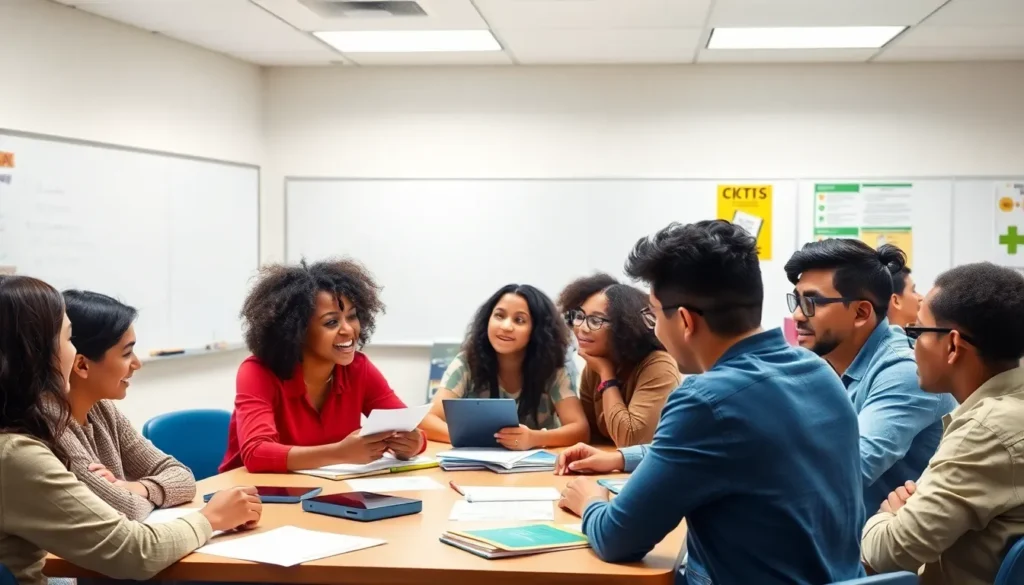
Education isn’t just about textbooks and tests; it’s a battleground of ideas where everyone’s got a stake. From debates over standardized testing to the heated discussions on curriculum content, the classroom has become a hotbed for controversy. Who knew that teaching kids could spark more drama than a reality TV show?
Overview of Controversial Issues in Education Today
Education faces numerous controversial issues that spark intense debates among educators, parents, and policymakers. Standardized testing continues to generate significant discourse, with many questioning its effectiveness in measuring student performance. Critics argue that an overemphasis on testing narrows the curriculum and hampers creativity.
Curriculum content remains another contentious topic. The inclusion of various perspectives in subjects like history and science often divides opinions. Some advocate for comprehensive education that reflects diverse narratives, while others favor a more traditional approach. Inclusion of culturally relevant content has led to clashes over what should be taught.
Teacher evaluations also generate disputes, particularly regarding the metrics used to assess performance. Many educators express concerns that using student test scores as a primary evaluation tool fails to account for the complexities of teaching environments. This approach can lead to stress and burnout among teachers.
School funding decisions significantly impact educational equity, fueling debates about resource allocation. Public schools in underfunded areas often struggle to provide adequate services, while those in wealthier districts thrive. Advocacy for equitable funding models has gained traction as communities seek to address these disparities.
Digital learning represents a modern battleground in educational debate. The rapid shift to technology-based education highlights concerns about accessibility and student engagement. Discussions about the role of online platforms in replacing traditional classrooms often evoke divided opinions.
Disciplinary practices in schools have sparked conversations about racial disparities and justice. Implementing restorative practices offers alternatives to suspension and expulsion, creating opportunities for learning rather than punishment. Stakeholders continue to evaluate how to balance discipline with educational goals.
Curriculum Controversies

Curriculum controversies often ignite passionate debates within educational institutions. Issues like Critical Race Theory and sex education exemplify the challenges faced by educators and policymakers.
Critical Race Theory
Critical Race Theory (CRT) examines systemic racism’s role in society and law. Some education advocates argue for its inclusion in school curricula to foster understanding of racial inequality. Critics, however, assert that teaching CRT promotes division among students. Since 2021, numerous states enacted laws restricting CRT in public schools. Some educators experience uncertainty in navigating this complex issue due to varying state regulations. Ultimately, the discussion around CRT continues to impact educational policies and classroom dynamics across the nation.
Sex Education
Sex education remains a divisive topic in many school districts. Comprehensive programs aim to provide students with essential knowledge about consent and safe practices. Supporters claim these programs contribute to healthier relationships and reduced teen pregnancy rates. In contrast, opponents often advocate for abstinence-only education, citing moral objections. Studies indicate that access to comprehensive sex education correlates with lower rates of sexually transmitted infections among teens. Each local education authority faces pressure to define appropriate curriculum standards amidst these ongoing debates.
Standardized Testing Debates
Standardized testing continues to be a polarizing topic in education. Discussions often focus on its efficacy in truly measuring student performance.
Impact on Students
Standardized tests tend to influence how students perceive their learning experiences. High-stakes testing can create immense pressure, affecting students’ mental health and motivation. Stress associated with test results often leads to anxiety, changing how students approach their education. Students in underfunded schools frequently face additional hurdles, resulting in inequities in performance outcomes. Critics believe that narrowing the curriculum to prioritize test preparation stifles creativity and critical thinking. Diverse learning styles receive less attention, as the focus remains on aligning with standardized benchmarks. Inclusivity in teaching methods is often sacrificed for the sake of test scores.
Alternatives to Standardized Testing
Various alternatives to standardized testing seek to provide more holistic assessments of student knowledge. Portfolio assessments allow students to showcase a range of skills through completed work over time. Performance-based assessments put emphasis on real-world applications, encouraging deeper understanding. Teacher assessments also offer insights by evaluating student progress in context, taking individual learning trajectories into account. Continuous feedback mechanisms involve regular check-ins and adaptations, which support ongoing learning rather than simply measuring outcomes. Schools increasingly explore competency-based education, promoting individualized pacing and mastery before advancing. Each of these alternatives aims to enrich the educational experience and mitigate the drawbacks of traditional standardized testing.
School Funding Disputes
School funding remains a contentious issue, with significant implications for educational outcomes. Disparities between public and private funding sources often create unequal educational landscapes.
Public vs. Private Funding
Public funding primarily comes from state and local taxes. Private funding, including donations and tuition from families, can significantly bolster resources in wealthier schools. Public schools often struggle with budget constraints that limit program offerings, while private institutions can provide enhanced facilities and smaller class sizes. Variations in funding lead to unequal access to educational resources. Public schools, bereft of sufficient funding, may lack technology, extracurricular activities, and advanced coursework. In contrast, wealthy private schools often enjoy robust financial backing, providing students with richer educational opportunities. The existing funding disparity raises important questions about fairness and access in education.
Equity in Education
Equity in education addresses the need for fair funding distribution among school districts. Underfunded schools, often found in low-income areas, fail to offer essential services and quality instruction. Students in these schools experience limited access to advanced courses, extracurricular activities, and experienced teachers. The impact of inadequate funding perpetuates cycles of poverty and educational disadvantage. Recognizing this inequity, advocacy groups push for reforms that emphasize equitable funding models. Solutions such as funding formula adjustments and increased state support seek to level the playing field between affluent and underfunded districts. Addressing these disparities is crucial for fostering equitable educational opportunities for all students.
Technology in the Classroom
Technology’s impact on education sparks varied opinions. Advocates highlight enhanced engagement, personalized learning, and access to vast resources. Interactive tools like tablets and educational software encourage student participation. Many argue that technology prepares students for an increasingly digital workforce. Additionally, online platforms facilitate collaboration and feedback among peers and educators.
Critics, however, raise concerns about distractions and dependency on devices. They worry that technology may hinder critical thinking and interpersonal skills. Over-reliance on digital resources can lead to superficial understanding. Potential inequities also emerge, particularly regarding access to high-quality technology in schools.
Pros and Cons
Integrating technology in education presents distinct advantages and disadvantages. Increased engagement through interactive learning environments captivates students’ attention. Assessments that provide immediate feedback enhance the learning experience. Encouraging individual learning paces fosters a deeper understanding of material. Flexible learning environments accommodate diverse learning styles.
On the flip side, technology often leads to screen fatigue among students. Challenges arise with distractions from non-educational applications and websites. Furthermore, the cost of obtaining and maintaining technology poses significant burdens for schools. Teachers may struggle to integrate tech effectively into curricula, as training requirements complicate implementation.
Digital Divide
The digital divide signifies a pressing issue in education today. Access to technology varies across socioeconomic backgrounds, leading to disparities in learning opportunities. Students in underfunded districts often lack devices or reliable internet connectivity. Such limitations hinder their ability to engage fully with digital resources.
Consequences of this divide manifest in uneven academic performance. Students without adequate access miss out on essential learning tools. Efforts to bridge the digital gap require collaborative initiatives between government, private sector, and educational institutions. Ensuring equitable access can promote inclusivity and foster better educational outcomes for all students.
Education today faces a myriad of controversial issues that reflect broader societal debates. From the effectiveness of standardized testing to the complexities of curriculum content, these challenges require thoughtful dialogue and innovative solutions. The disparities in school funding and access to technology further complicate the landscape, emphasizing the need for equitable resources.
As educators navigate these contentious topics, the focus must remain on fostering inclusive environments that prioritize student well-being and creativity. By embracing diverse perspectives and advocating for fair policies, stakeholders can work towards a more just and effective educational system. The future of education hinges on addressing these issues head-on, ensuring all students have the opportunity to thrive.
