
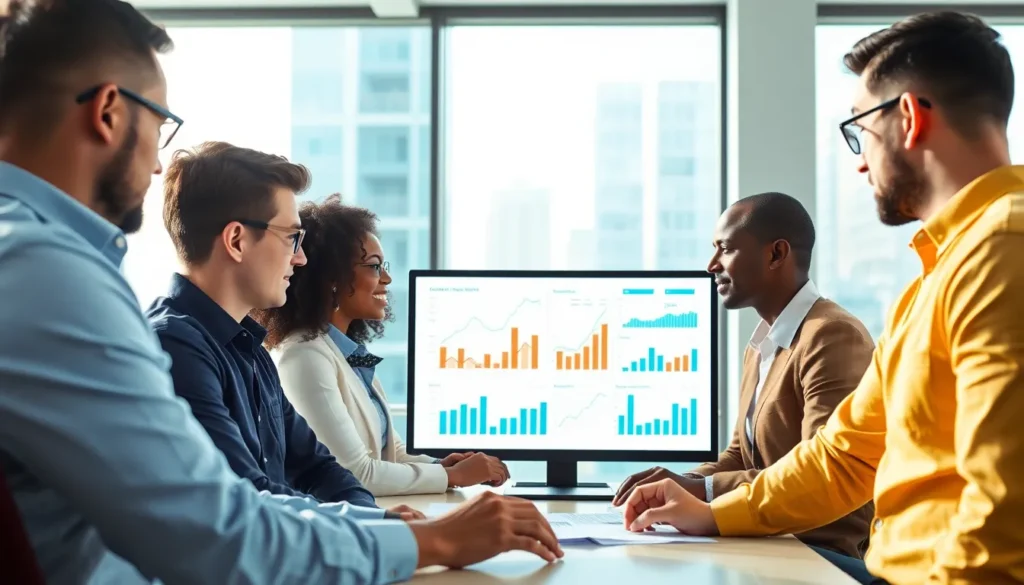
Understanding economic trends is like trying to read tea leaves—only instead of a cozy cup, you’re sipping on data and charts. These trends reveal the patterns in economic activities that can make or break businesses and influence everyday life. They’re not just numbers; they’re the pulse of the economy, telling us where we’ve been and hinting at where we’re headed.
Understanding Economic Trends
Economic trends encompass the patterns and changes in various economic indicators over time. These indicators highlight the health and direction of an economy, making them crucial for analysis.
What Are Economic Trends?
Economic trends consist of long-term shifts in economic activity that can include growth, inflation, and unemployment rates. An increase in GDP signals economic growth, while persistent inflation indicates rising prices. Analysts study these patterns over months or years, using historical data to predict future movements. By observing these trends, businesses gain insights into market opportunities and consumer behavior, enabling them to make informed decisions.
Importance of Economic Trends in Analysis
Economic trends play a vital role in analysis across different sectors. Decision-makers rely on these trends to assess market conditions and inform investment strategies. Monitoring changes in employment rates helps businesses gauge labor availability. Additionally, fluctuations in consumer spending indicate confidence in the economy. Analysts also examine trends to identify economic cycles, allowing organizations to adapt to potential downturns or growth phases effectively.
Types of Economic Trends

Economic trends can be categorized into two main types: short-term trends and long-term trends. Each type offers unique insights into the economic landscape.
Short-term Trends
Short-term trends reflect fluctuations in economic indicators over shorter periods, usually lasting less than a year. These variations typically arise from seasonal factors, immediate market changes, and policy adjustments. Businesses closely monitor consumer spending patterns as they influence inventory levels and production decisions. Earnings reports during critical retail periods, such as holidays, reveal insights into consumer confidence. Furthermore, short-term economic indicators like monthly unemployment rates provide immediate feedback on labor market conditions. Analysts often use this data to adjust strategies rapidly in response to changing market dynamics.
Long-term Trends
Long-term trends span several years, indicating persistent patterns that affect the economy’s trajectory. Factors contributing to these trends include demographic shifts, technological advancements, and policy changes. Economic growth, for example, shows a sustained increase in GDP over extended periods, reflecting overall health. Inflation rates observed over years signal purchasing power changes, impacting both consumers and businesses. Unemployment rates also illustrate long-term shifts in workforce dynamics, indicating structural changes in the job market. Understanding these trends allows organizations to craft strategic plans that adapt to evolving economic environments effectively.
Factors Influencing Economic Trends
Economic trends are shaped by various factors that reflect market behaviors and governmental actions. Understanding these influences helps businesses and policymakers navigate economic landscapes effectively.
Market Dynamics
Market dynamics refer to the forces of supply and demand that influence prices and availability of goods and services. Changes in consumer preferences significantly alter spending habits, impacting overall economic performance. Competition among businesses drives innovation and efficiency, further affecting market trends. Furthermore, fluctuations in global markets can trigger local economic shifts, as international trade and tariffs play crucial roles. Companies must continuously analyze these market dynamics to align strategies with evolving consumer needs and capital investment decisions.
Government Policies
Government policies create the framework within which economic activities occur. Taxation changes can directly influence disposable income, thereby affecting consumer spending and investment. Monetary policy, implemented by central banks, impacts interest rates and money supply, which in turn shapes borrowing and spending behaviors. Regulations governing various industries also affect how companies operate, influencing their growth and adaptation strategies. By evaluating government actions, organizations can better anticipate shifts in the economic environment and adjust their operational plans accordingly.
Applications of Economic Trends
Economic trends play a vital role in various sectors, influencing strategies and decisions.
Business Strategy Development
Businesses leverage economic trends to craft effective strategies. Recognizing shifts in consumer behavior helps organizations adjust product offerings. Whether fluctuations in spending or emerging industries, these trends inform marketing tactics. Analysts utilize historical data to pinpoint growth opportunities and align with market demands. Adapting to long-term economic changes fosters resilience in a competitive landscape. Moreover, businesses can anticipate challenges and implement proactive measures. Understanding trends drives innovation, ensuring companies remain relevant and competitive.
Investment Decisions
Investment decisions depend heavily on economic trends. Investors analyze indicators such as employment rates and inflation to gauge market stability. Recognizing potential growth areas allows for more informed asset allocation. Investors who track these shifts can capitalize on emerging opportunities. Adjusting portfolios according to economic forecasts mitigates risks associated with market volatility. Furthermore, evaluating trends aids in understanding broader market sentiment, shaping strategies for optimal returns. Informed investment approaches based on economic data lead to substantial long-term gains.
Grasping economic trends is vital for navigating today’s complex marketplace. By analyzing short-term and long-term patterns, businesses can adapt strategies to align with consumer demands and market shifts. This understanding not only aids in identifying growth opportunities but also enhances resilience in a competitive landscape.
Moreover, the influence of market dynamics and government policies cannot be overlooked. These factors shape economic performance and dictate the necessary adjustments organizations must make. Ultimately, staying informed about economic trends empowers decision-makers to foster innovation and maintain relevance in an ever-evolving economic environment.
